This month in the garden – July

GARDENING WITH CONFIDENCE™

THIS MONTH IN THE GARDEN

Mid-Atlantic Region

July Maintenance Guide

JuneGBBD 123

INTRO

July is your reward to many months of gardening efforts.  Whether you vacate to see what the rest of the gardening world is doing or staycate to reap your rewards with fresh fruits, vegetables, and flowers, either way, now is the time to put down your trowel to travel and tour!

ANNUALS

  • Cut back summer annuals so they don’t become leggy.  A good time to do this is right before you go on vacation. You will be gone, thus missing the unsightliness of the haircut. This will help the plants look good through the fall.
  • Petunias will benefit from a summer pinch.  By removing an inch or two from the ends of the stems throughout the summer, encourages branching, resulting in a bushier plant.
  • Cleome, cosmos and zinnias, can still be planted or sown for continuous blooms ‘til frost.
CleomeCleome

BULBS

  • Bulb catalogues are arriving.  Many pages of many catalogues sitting in the table of my reading are dog eared.
  • On my summer flowering bulb list are: Calla lily (Zantedeschia), canna, Crinum lily, Liatris (at least the one the bunny missed), Asiatic lily, Oriental lily, and tuberose.
CrinumCrinum

HERBS

  • Harvest Provence lavender.  Cut stems, bundle, hang upside down and in a dark, dry place.  Within 2 weeks, the florets will easily fall from the stems.  To make lavender sugar, grind dried florets in a coffee grinder and mix with sugar.
  • Cut back basil to keep from going to seed.  Don’t forget to use it!
  • Keep oregano cut back to keep from going to seed.

JuneGBBD 080

PERENNIALS

  • Continue to deadhead to tidy the garden and encourage more flowering.  There are many perennials grown for the wildlife so don’t be to tidy;  leave some seed heads.  Not only will the birds enjoy the seed, you will enjoy watching them retrieve the seed.
  • Perennials that benefit most from deadheading include bee-balm, black-eyed Susan, daylilies, coneflowers, salvia, Stoke’s aster, yarrow. Also Coreopsis will benefit from a shearing to encourage a second bloom.
  • Garden centers may have reduced prices on earlier blooming perennials. A great opportunity to save some money, but this is not a good time to plant.  If you proceed, provide extra nurturing (and watering) until established.
  • As a butterfly gardener, a purple coneflower is a staple in my Mixed Border.  Even if I was just gardening for the flowers, Echinacea purpurea would be at the top of my list of must have plants.  There is now a wide range of colors – ‘Sunrise’, Sundown’, Twilight’, Harvest Moon’, Summer Sky’, ‘After Midnight’ and more. Sadly, the bunnies find all the colors tasty.
  • Did you know there is no research showing that English Ivy climbing up your trees will actually harm the tree?  It is not one of my favorite looks and I encourage others to keep it from climbing.  If you want to remove it, cut it at the base and wait a year or so for it to die back before pulling it off; otherwise, removing it will harm the tree (taking bark with it.)   When it climbs, the adult ivy forms.  Here is where it seeds and makes more ivy.  If not able to climb, it will spread, but can more easily be kept in check.  Just keep an eye on it.

JuneGBBD 056c

  • Perennials

The first year they sleep

The second year they creep

The third year they leap

Author unknown

TREES AND SHRUBS

  • This is not a good time for planting trees and shrubs.  If you find some good deals at the garden center, by all means purchase.  But wait until fall for planting.
  • As the new growth emerges on your specimen conifer, candle-prune to maintain the shape.

ROSES

Pink PeacePink Peace

  • It’s Japanese beetle time!  They are attracted to the color.  To discourage this, keep the roses “in the green” whereby cutting your roses for our enjoyment indoors.  I hand pick Japanese beetles off the plant and drop into a bucket of soapy water.
  • Water your roses deeply to encourage a deep root system.  At Helen’s Haven, I have the upper garden’s French drain empty here.  In effect, it’s a rain garden, but with supplemental watering in the absence of natural rainfall.  The hotter it is, the more water roses require.
  • To reduce fungal disease such a black stop, avoid watering the leaves.  Of course, there is nothing you can do to prevent this when a summer rain falls.
  • Ensure the roses are mulched to help retain moisture.
  • Prune climbers and ramblers that bloom once on last year’s growth.  Thin out dead canes.

MULCH

  • As you added annuals and perennials up to now, the spring mulch has no doubt been disturbed.  Now is a good time to do an abbreviated mulching to tidy up the disturbed areas.  But of course, the best reason to do so is to retain moisture, particular for these new plantings until they are established.

WEEDS

  • The best advice anyone can give you with regards to weeds, pull them when you see them.  Walk your garden often.  Enjoy the journey and pull a weed when you see it.  It keeps weeds in check and saves you from having to tackle a major problem latter.
  • Like a grey hair, every weed you pull, three grow back – or so it seems.

WATER

As summer begins, so do summer vacations.  This also arises the need to have your garden looked after while you are gone!  When preparing to go on summer vacation, there are three main areas in the garden the elicit attention:  Container gardens, plants in the garden not yet established, and plants in the established garden.

CONTAINER GARDENS

There is no need not to have container gardens just because you are going on vacation and don’t want to be bothered.  Why let a week or two away keep you from coming home to some nice plantings?  Here are some tips to caring for your container gardens and houseplants while you are on vacation.  These tips are for those with and without automatic irrigation systems.

  • Bring houseplants outside under the cool of the porch or eves of the house.
  • Get a neighbor kid to come over everyday to check on things and to water.  Most pots will need watering everyday.
  • Pool you pots together near a water source and out of the afternoon sun.
  • Add extra mulch to the base of the plant.
  • Add water lines to your containers from your irrigation system.
  • Don’t have an irrigation system?  The garden centers and big box stores sell automatic systems that hook up to your spigot.  These systems are easy to install, include a timer to turn on the water a certain time(s) of the day and for a dialed in duration.

CARING FOR YET TO BE ESTABLISHED PLANTS IN THE BED OR BORDER

  • The neighborhood kid or friend will be a big help while you are gone.  In the absence of automatic irrigation, caring for the garden while you are away is a little trickery.  For your convenience and to aid the person helping while you are gone, marking the plants yet to be established, thus needing additional attention, will be important.  Clearly mark the plant with a survey flag.  This will help remind you and your care giver who needs a drink while you are gone.

CARING FOR ESTABLISHED PLANTS IN THE BED OR BORDER

  • Most established gardens should survive a week without watering.  Most years, the concern is with container plants and plants that have yet to establish, both concerns are addressed above.
  • Even in an established bed, some plants will require more attention than others.  One of the best ways to learn when you’re your garden needs watering is to identify an “indicator plant.”  An indicator plant is usually one of your garden’s the thirsty-er plants.  For my garden, Helen’s Haven, it’s an Endless Summer Hydrangea.  If my indicator is looking thirsty (wilted) in the morning, it needs water.  As such, I would then direct the caregiver to water while I am away.  If not, then you should be good to go.  It should also be noted that this same plant may look wilted in the last afternoon, but this is not a true indication.  Have them check it again in the morning.  If not wilted, then it is fine

It is also a good idea before you leave to weed, deadhead, and water everything thoroughly.

WILDLIFE

  • Continue to fill feeders, provide clean water daily, and refresh hummingbird feeders with fresh sugar water.

Formula for hummingbird nectar:  4 parts water, one part sugar.  Heat until the sugar is dissolved.  Once cooled, fill feeders.  Nectar can be stored in the refrigerator up to a week.  Change the feeder nectar often, daily when temperatures reach the upper 80s.

Maintenance guide and photos by

Helen Yoest

Gardening With Confidence

Permalink

7 Comments »

  1. tina said

    June 25, 2009 @ 10:19 am · EditExcellent tips. I like the gray hair simile. It must be why I have so many:)

    When are you posting on your visit with Janet, Racquel and Les?

  2. June 25, 2009 @ 11:15 am · EditHey Tina, with regards to weeds and gray hairs, maybe we should stop pulling them. How bad can it get? Never mind, I just had an imagine of weeds EVERYWHERE!

    I’ll post the visit with Janet, Racquel and Les during my Sunday puttering post. Since returning from my scouting trip, I am behind – as in a big behind not even my big purse can hide! I have 3 deadlines waiting first!

    H.

  3. Racquel said

    June 25, 2009 @ 1:12 pm · EditWhat a great information post Helen. Thanks for all the tips & reminders. It gets so hot at this time of the year sometimes I forget. ;)

  4. Janet said

    June 25, 2009 @ 1:25 pm · EditHi Helen, good tips…..summer is when my garden explodes!! Guess I should at least deadhead some stuff in the early mornings.

  5. June 25, 2009 @ 1:59 pm · EditHey Racquel and Janet, boy do I love to dish out the tips, but right now, I’m having trouble getting my air conditioned self out there doing it. There’s always this evening!

    I went to this most amazing garden during my Virginia/Outer Banks scouting trip. She had thousands of daylilies (more than 500 varieties) and EVERYONE was deadheaded. I bowed to her greatness and wanted to hang with her all day long. I make not bones about being a tidy gardener, but when I saw this maintenance poster child, it confirmed it all the more, maintenance matters! H.

  6. June 25, 2009 @ 10:20 pm · EditYou know I like these post. Love your Cleome and agree that July is our reward for working hard.

  7. Jesslyn said

    June 25, 2009 @ 11:57 pm · Editcool tips tina!!
    the pink peace rose is beautiful
    thx a lot for sharing..

    GooD Day

    Jesslyn Tanady

    All Gardening Secret

Leave a Comment

A nod to Eliabeth Lawrence – a fresh idea on flower arranging

Little bottles (1)

A Nod to Elizabeth Lawrence

A Fresh Idea on Flower Arranging

Ah, fresh flowers in our presence gives so much pleasure.  When friends come to share a meal or conversation, fresh flowers usually tops the list of preparations for  a festive evening.  Often times, I’ll fill a vase with masses of billowing flowers either one of kind or an arrangement of different flowers.  They were always pretty, but really served no purpose other then being pretty.

Through fresh eyes, on a pretty spring day, I learned a simple lesson about flowers.  I was having lunch with my good friend, Lindie Wilson, at the former home and garden of Elizabeth Lawrence.   On the dining room table at the window overlooking Miss. Lawrence’s stand of bamboo,  I noticed little clear bottles and vases on the table filled with fresh flowers.  Just one flower filled each vase.  It made the most simple and beautiful arrangement.  They were all different with no apparent thought to a theme of any kind.  When I asked about them, Lindie explained that was how Elizabeth Lawrence used fresh flowers.  She would fill the little bottles and vases with flowers blooming in her garden.  It was a wonderful conversation piece.  The flowers were cut from her garden.  Not masses of blooms, but rather a single snip of what was blooming then.

Dining room of Elizabeth Lawrences home

Dining room of Elizabeth Lawrence's home

It was also fun to move the bottles around seeing how one flower looked with another.  The simple tactile pleasure of moving the bottles around sprung  ideas as to how they would work in the garden.

Now, as I prepare to entertain, I snip flowers from the garden and fill little vases.  Without fail, the conversation goes to the flowers, not just how pretty they are, but what they are and what they represent – the conversation is about the delight and wonder of what’s blooming in the garden now.

Little bottles - milk bottles (4)

Helen Yoest
Gardening With Confidence

Home & Garden Business Directory - BTS Local

Comments (13)

Sunday, June 28, 2009 A week puttering in Helen’s Haven

Daylily photo taken at Smithfield Gardens, Suffolk, VA

Daylily photo taken at Smithfield Gardens, Suffolk, VA

This thing called blogging is catching on.  New blogs are starting faster than fallen seeds sprouting from my feeders.

As a garden writer, blogging is a welcome relief – no deadlines, no word limit, no pitching.  I can write 999 words or 99.  I choose to write what I want and when. It’s a welcome change from the day-to-day.  This post in particular, my weekly journal, is my favorite to write.  Yesterday, I wrote a Dear Cleome letter about cooling my relationship with said plant.  No doubt, no editor of mine would be interested in that letter, but I enjoyed writing it…the entire 3 minutes it took to write.

Gardening with Confidence and A Tidewater Gardener

Gardening with Confidence and A Tidewater Gardener

With blogging came a network of new friends – other bloggers.  Many are professionals, like me, others are retirees who find pleasure in posting about their garden’s goings on.  There are as many reasons to blog as there are bloggers.    What we all have in common is sharing information about plants, events, places to visit and yes, ourselves and our families.

Often, code words are used to name our children, husbands or significant other.  I refer to my husband, David, as my good looking husband or on twitter (I can be followed at @HelenYoest), as MGLH.

I visit some blogs just to see the photographs.  That’s how I got to know Les @ A Tidewater Gardener.  Then as small worlds would have it, we have a mutual friend in Mark Weathington, Assistant Director at the JC Raulston Arboretum.  I have no idea how I learned this, but the subject came up, none-the-less.  While the photos lured me in, the content kept me coming back for more.  He has a gentle style that I enjoy.

I saw that Janet @ The Queen of Seaford and Racquel @ Perennial Garden Lover would visit Les’ blog and leave comments.  Soon, I was clicking on their names and this would take me to their blogs and I liked what I saw.  And so it goes.   I learned to love their styles, preferences, purchases, day to day life.  Just like the old days, when I would call a friend on the phone to see what was going on, I check friend’s recent blog posts to catch up.    By the way Racquel, I hope your grandfather is doing better!

As all my blogging friends know, I am not the best friend.  I don’t write comments often enough…for that I am so sorry.  I’m distracted easily; my only defense, which we all know is no good reason at all.

Perennial Gardener, Gardening With Confidence, Queen of Seaford

Perennial Gardener, Gardening With Confidence, Queen of Seaford

When I needed to be in Virginia, I emailed Les to see if could see his garden and the Smithfield Gardens, a garden center in Suffolk, VA, where he works.  Then the idea of a tiny blogger’s hook up was born.   Racquel and Janet met Les and I  at the garden center (sorry for being late guys, we were beguiled in another garden.)  Before I forget Les, what is name of the plant in the photo below – again?  I need me some of that!

Smithfileld 236

If all goes well, I will be visiting Janet and Racquel’s respective gardens in July.  I’m excited about that.  They will be seeing Les’ garden soon.

I found now that I’ve actually met these new friends, I’m more committed to the relationship than before.  I’ve now taken to putting a astrisk next to blog sites of blogger I’ve met as shown in Helen’s Blog Roll.

Thanks for taking the time to get together Les, Janet, and Racquel.  It was an enjoyable experience and I’m already looking forward to the next time…

And for the rest of the week…

Tis the season, and I have been slammed scouting great gardens for publication.  This week has been set aside for me to send them in – I promise, y’all they’re coming.

Between the travel, tweets, and tris, I did manage to have fun in the garden.

  • While at the beach, I got some Spanish moss from a friend.  I want to see if I can grow it here.  Yes, I really do.
  • Pulled Cleome.
  • Mowed.
  • Trimed dead out of Curly willow ‘Scarlet Curls’.
  • Filled birdbaths and feeders.
  • Had my garden open for the JC Raulston Arboretum volunteers.  It was fun to show folks around (when I was home.)
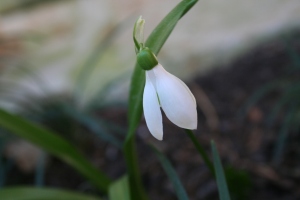
  • Planted plant Les gave me – too long to remember how to spell name and too tired to look up.

Also went to a Seasonal Celebration Party for the JC Raulston Arboretum.  Now that was fun.  Well done, Jayme and Phil.

Granting Father’s Day wishes, we packed up and spent an afternoon at the pool followed by burgers on the grill.  A great Father’s Day 2009.

Fathers day 002cc

Helen Yoest
Gardening With Confidence.com

Comments (10)

Dear Cleome,

JuneGBBD 020

Dear Cleome,

Since the day we first met, in what seems like another life ago and certainly another garden ago, I loved you.  I knew one day you would be mine.

Now after more than 10 years of you coming and going, you’re starting to, well, smother me – just a little.  I need a little space and so do some of my  friends.  Just recently, I wanted touch base with Callicarpa dichotoma and she was no where to be found.  The same was true with Crinum ‘Ellen Bosanquet’.  Its one thing with C. dichotoma because she prefers to visit in the fall, but you know Ellen likes to visit with me in the summer.

We had a lot of good times together.  I hope our love affair will continue for many more years.  I’ve so enjoy your friends and they are always welcome here, especially the hummingbirds.  I’m particularly grateful you don’t keep company with any bad animals like the voles, deer, and rabbits.  The fact that you bloom where you’re planted just did it for me. And still does.  Don’t misunderstand me, you will always be apart of my life.  I cannot live without you, but for right now, I just need some space.

Please don’t take this hard.  Just give me some time; by early summer of next year, I will welcome you back with open arms.

Yours, Ty Dee

Helen Yoest
Gardening With Confidence

Comments (12)

This month in the garden – July

GARDENING WITH CONFIDENCE™

THIS MONTH IN THE GARDEN

Mid-Atlantic Region

July Maintenance Guide

JuneGBBD 123

INTRO

July is your reward to many months of gardening efforts.  Whether you vacate to see what the rest of the gardening world is doing or staycate to reap your rewards with fresh fruits, vegetables, and flowers, either way, now is the time to put down your trowel to travel and tour!

ANNUALS

  • Cut back summer annuals so they don’t become leggy.  A good time to do this is right before you go on vacation. You will be gone, thus missing the unsightliness of the haircut. This will help the plants look good through the fall.
  • Petunias will benefit from a summer pinch.  By removing an inch or two from the ends of the stems throughout the summer, encourages branching, resulting in a bushier plant.
  • Cleome, cosmos and zinnias, can still be planted or sown for continuous blooms ‘til frost.
Cleome

Cleome

BULBS

  • Bulb catalogues are arriving.  Many pages of many catalogues sitting in the table of my reading are dog eared.
  • On my summer flowering bulb list are: Calla lily (Zantedeschia), canna, Crinum lily, Liatris (at least the one the bunny missed), Asiatic lily, Oriental lily, and tuberose.
Crinum

Crinum

HERBS

  • Harvest Provence lavender.  Cut stems, bundle, hang upside down and in a dark, dry place.  Within 2 weeks, the florets will easily fall from the stems.  To make lavender sugar, grind dried florets in a coffee grinder and mix with sugar.
  • Cut back basil to keep from going to seed.  Don’t forget to use it!
  • Keep oregano cut back to keep from going to seed.

JuneGBBD 080

PERENNIALS

  • Continue to deadhead to tidy the garden and encourage more flowering.  There are many perennials grown for the wildlife so don’t be to tidy;  leave some seed heads.  Not only will the birds enjoy the seed, you will enjoy watching them retrieve the seed.
  • Perennials that benefit most from deadheading include bee-balm, black-eyed Susan, daylilies, coneflowers, salvia, Stoke’s aster, yarrow. Also Coreopsis will benefit from a shearing to encourage a second bloom.
  • Garden centers may have reduced prices on earlier blooming perennials. A great opportunity to save some money, but this is not a good time to plant.  If you proceed, provide extra nurturing (and watering) until established.
  • As a butterfly gardener, a purple coneflower is a staple in my Mixed Border.  Even if I was just gardening for the flowers, Echinacea purpurea would be at the top of my list of must have plants.  There is now a wide range of colors – ‘Sunrise’, Sundown’, Twilight’, Harvest Moon’, Summer Sky’, ‘After Midnight’ and more. Sadly, the bunnies find all the colors tasty.
  • Did you know there is no research showing that English Ivy climbing up your trees will actually harm the tree?  It is not one of my favorite looks and I encourage others to keep it from climbing.  If you want to remove it, cut it at the base and wait a year or so for it to die back before pulling it off; otherwise, removing it will harm the tree (taking bark with it.)   When it climbs, the adult ivy forms.  Here is where it seeds and makes more ivy.  If not able to climb, it will spread, but can more easily be kept in check.  Just keep an eye on it.

JuneGBBD 056c

  • Perennials

The first year they sleep

The second year they creep

The third year they leap

Author unknown

TREES AND SHRUBS

  • This is not a good time for planting trees and shrubs.  If you find some good deals at the garden center, by all means purchase.  But wait until fall for planting.
  • As the new growth emerges on your specimen conifer, candle-prune to maintain the shape.

ROSES

Pink Peace

Pink Peace

  • It’s Japanese beetle time!  They are attracted to the color.  To discourage this, keep the roses “in the green” whereby cutting your roses for our enjoyment indoors.  I hand pick Japanese beetles off the plant and drop into a bucket of soapy water.
  • Water your roses deeply to encourage a deep root system.  At Helen’s Haven, I have the upper garden’s French drain empty here.  In effect, it’s a rain garden, but with supplemental watering in the absence of natural rainfall.  The hotter it is, the more water roses require.
  • To reduce fungal disease such a black stop, avoid watering the leaves.  Of course, there is nothing you can do to prevent this when a summer rain falls.
  • Ensure the roses are mulched to help retain moisture.
  • Prune climbers and ramblers that bloom once on last year’s growth.  Thin out dead canes.

MULCH

  • As you added annuals and perennials up to now, the spring mulch has no doubt been disturbed.  Now is a good time to do an abbreviated mulching to tidy up the disturbed areas.  But of course, the best reason to do so is to retain moisture, particular for these new plantings until they are established.

WEEDS

  • The best advice anyone can give you with regards to weeds, pull them when you see them.  Walk your garden often.  Enjoy the journey and pull a weed when you see it.  It keeps weeds in check and saves you from having to tackle a major problem latter.
  • Like a grey hair, every weed you pull, three grow back – or so it seems.

WATER

As summer begins, so do summer vacations.  This also arises the need to have your garden looked after while you are gone!  When preparing to go on summer vacation, there are three main areas in the garden the elicit attention:  Container gardens, plants in the garden not yet established, and plants in the established garden.

CONTAINER GARDENS

There is no need not to have container gardens just because you are going on vacation and don’t want to be bothered.  Why let a week or two away keep you from coming home to some nice plantings?  Here are some tips to caring for your container gardens and houseplants while you are on vacation.  These tips are for those with and without automatic irrigation systems.

  • Bring houseplants outside under the cool of the porch or eves of the house.
  • Get a neighbor kid to come over everyday to check on things and to water.  Most pots will need watering everyday.
  • Pool you pots together near a water source and out of the afternoon sun.
  • Add extra mulch to the base of the plant.
  • Add water lines to your containers from your irrigation system.
  • Don’t have an irrigation system?  The garden centers and big box stores sell automatic systems that hook up to your spigot.  These systems are easy to install, include a timer to turn on the water a certain time(s) of the day and for a dialed in duration.

CARING FOR YET TO BE ESTABLISHED PLANTS IN THE BED OR BORDER

  • The neighborhood kid or friend will be a big help while you are gone.  In the absence of automatic irrigation, caring for the garden while you are away is a little trickery.  For your convenience and to aid the person helping while you are gone, marking the plants yet to be established, thus needing additional attention, will be important.  Clearly mark the plant with a survey flag.  This will help remind you and your care giver who needs a drink while you are gone.

CARING FOR ESTABLISHED PLANTS IN THE BED OR BORDER

  • Most established gardens should survive a week without watering.  Most years, the concern is with container plants and plants that have yet to establish, both concerns are addressed above.
  • Even in an established bed, some plants will require more attention than others.  One of the best ways to learn when you’re your garden needs watering is to identify an “indicator plant.”  An indicator plant is usually one of your garden’s the thirsty-er plants.  For my garden, Helen’s Haven, it’s an Endless Summer Hydrangea.  If my indicator is looking thirsty (wilted) in the morning, it needs water.  As such, I would then direct the caregiver to water while I am away.  If not, then you should be good to go.  It should also be noted that this same plant may look wilted in the last afternoon, but this is not a true indication.  Have them check it again in the morning.  If not wilted, then it is fine

It is also a good idea before you leave to weed, deadhead, and water everything thoroughly.

WILDLIFE

  • Continue to fill feeders, provide clean water daily, and refresh hummingbird feeders with fresh sugar water.

Formula for hummingbird nectar:  4 parts water, one part sugar.  Heat until the sugar is dissolved.  Once cooled, fill feeders.  Nectar can be stored in the refrigerator up to a week.  Change the feeder nectar often, daily when temperatures reach the upper 80s.

Maintenance guide and photos by

Helen Yoest

Gardening With Confidence

Comments (7)

J.C. Raulston Agave Blooms!

CHECK THIS OUT AGAVE FANS!

Agave Blooms

From Charlie Kidder, volunteer in the Xeric Gardens at the JC Raulston Arboretum since 2003 and is an absolute sucker for the sculptural quality of the all the agaves and their kin.  “My favorite has always been the Mescal barrel agave ‘J.C. Raulston’.  Its silvery-gray leaves are punctuated with purple-black spines and teeth, a very natty combination.  Looking straight down onto the plant–before the flower spike erupted, that is–revealed an almost hypnotic shape of interwoven triangles.

But now comes this agave’s great moment of glory, with its twelve-foot flower spike shooting up in just two months.  It’s a sight to make any guy envious!  But watch what you wish for, since flowering is the end of the agave’s life cycle.  Still, nothing like going out in style!  And even though the main agave plant will die shortly, a younger offshoot known as a “pup” will live on to beguile visitors in the future.
We generally leave agave flower stalks up even after they dry out for winter interest, but if you come out to the Arboretum soon, you can still see the dozens of yellow flowers that now top the candelabra.  You can spot it from the parking lot, against the dark green background of the holly hedge off to the south.”

From Chris Glenn, Programs and Educaiton Coordinator, JC Raulston Arboretum, “If you’ve been a Cuttings from the JCRA subscriber for a few years, you know I’m a big fan of agaves. I’ve shared their flowering here at the JCRA on a few occasions. Well, it’s that time again. Our Agave parryi subsp. parryi var. truncata ‘J.C. Raulston’ is currently in full flower. I’ve put together a photograph gallery of the plant’s flowering for you to enjoy this weekend. Better yet, come out and see it for yourself. It’s in the Xeric Garden behind the Ruby C. McSwain Education Center. Tony Avent recently named this particular plant in honor of Dr. J. C. Raulston.”

Leave a Comment

Sunday June 21, 2009 A week puttering in Helen’s Haven

I fell into a hole of my own doing.  Before I had the flea market gate properly installed, I tried installing it myself.   Others are made up of DNA, I’m made of  DIY.  Not unlike DNA failing, this time,  my DIY ability failed me.  Not deterred, I just got the right person for the job.  Problem was, I had to get rid of my mistake.

A piece of re-bar I intended to use to support the gate was buried to what appeared to be the center of the earth.  I worked on it.  I had Brian (my summer helper kid) work on.  I worked on it some more.  It’s still there.  I can’t seem to dig it out.  In the meantime, there is a hole in the ground with re-bar rising from the earth, surrounded by a chunk of concrete.   In between all these efforts, I passed through there with mail in one hand, yard waste cans in the other and I fell in the hole.  Ouch.  Nothing broken, legs scratched and bruised; mail muddy.  It could have been much worse.  This is chit worthy; I will ask hubby for a hand.

Crabs 002cLily and Aster were at the Y camp in Arapahoe, NC this week.  After my husband returned from dropping them off, he visited our friend TD.  We are usually rewarded with crabs after visiting.  As such, here are the remains of breakfast Monday morning.  You can take the girl out of Chincoteague, but not Chincoteauge out of the girl.

First thing Asters did when he returned from camp was to check on his cucumbers.  Looks like he will have a bumper crop.  They neighbors are very happy with his success too.

Asters garden 014

This is the week 20 of us  JC Raulston Arboretum volunteers open our gardens to the 172 volunteers plus JCRA  staff members.  It’s a casual tour, not meant to be gussied up, just open for a week so folks can go by.  It’s fun to do and to visit with other volunteer friends.

We’re having a heat wave.  Friday’s heat index was 100, Saturday’s 106.

Fathers day 008

My blogging friend from Tennessee told me not to blog about it, but how can  I not?  When Tina with In The Garden visits the garden of other bloggers, she sends a gift of a garden name marker.  Here is a photo of Helen’s Haven.  I just love it.  Most of my readers know I’m  all about naming the garden – click here Creating a Garden Name It seem all the more important to me; I had a name, but no sign.  Now I both.

Summer Solstice 022

With the summer solstice here, I reflected on the shortening of the days.  I feel a sense of sadness with the summer solstice.  Contrary, in the dead of darkness, the winter solstice is my happiest time.  Despite the dark and cold, at least during  the winter solstice, the days become longer again.  We and other hosts, celebrated with a solstice party at the home and garden of Jayme Bednarczyk and Phil Abbott.  Our party was to celebrate and raise money for the JCRA Seasonal Celebrations.  I’ll post about the party later this week.

Helen Yoest and David Philbrook

Helen Yoest and David Philbrook

Jayme and Phil’s garden will also be open for the 2009 Garden Conservancy’s Open Days tour also benefiting the JC Raulston Arboretum Open Days Tour

Oh what fun we had in the garden this week:

I have a full week ahead including meeting 3 garden bloggers Les A Tidewater Gardener, Janet The Queen of Seafood and Racquel Perennial Garden Lover…this is gonna be fun!

Helen Yoest

Gardening With Confidence

Comments (3)

JC Raulston Arboretum Seaonal Celebrations – host a party in your home to help raise money for the JCRA!

The JC Raulston Arboretum at NC State University

Seasonal Celebrations

Friends Hosting Friends!

Anytime in 2009

Hmmm, host a garden party and when your guests ask, “What can I bring” just tell  them to write a check to the JC Raulston Arboretum. What a great idea.  This can happen anywhere, anytime!

We started this last year and called it a Summer Solstice Celebration.  Problem was, how could we go to a party and have one at the same time?  Plus, there were others who wanted to open their garden in winter or spring or a holiday, or…you get the idea.

So, for 2009 we will host parties anytime!  You pick the date, we will all celebrate!  We will gather friends to host a party – many parties – across the state to celebrate the JC Raulston Arboretum at NC State University.  This celebration is to raise money for the Arboretum.

The party concept is the same, it can be any party of the host’s choosing – it could be for cocktails, tapas, pizza, or more…it could be burgers, chicken, fish, and so’ mores… it could be cloth napkins, silver, and china galore… your home, your garden, your style, your taste…you set the time, menu, décor and pace.

Each host will ask their friends for a donation to attend.  This set amount is up to the host.   These parties will be in cottage gardens, patio gardens, rose gardens, and future gardens – each venue unique to the friend hosting the event, thus each donation unique to those attending!  Invite your book club, garden club, neighbors, or choir!  Maybe even your doctor, dentist, or secret desire!  Delight with friends and host an event.

The JC Raulston Arboretum will provide invitations to the host.  The host underwrites the party receiving a gift-in-kind tax deduction.  The guest receives a tax deduction for their donation.  The money raised will go to the JC Raulston Master Plan.
JC Raulston Arboretum

Call Anne Porter today to sign up to host a party at 919-513-3463 or e-mail her at Anne_Porter@ncsu.edu or Helen Yoest at Helen@GardeningWithConfidence.com

Helen's Haven hosted a Seasonal Celebration in 2008

Helen's Haven hosted a Seasonal Celebration in 2008

Comments (3)

Sunshine Lavender Farm near Hillsborough, NC

I read about it, heard about it, wondered about it.  I finally found the time to visit the Sunshine Lavender Farm.  The afternoon was delightful with an added bonus of hooking up with  a blogging buddy, Anna at Flower Garden Girl.  Anna will tell you too, it was a delightful visit.

SunshineLavenderFarmYoest 101

There was a country feel to the farm with quilts hanging from the close line, a fenced-in herb garden, lavender drying in the hayloft, chickens scratching for somethin’ in the dirt and kids enjoying themselves as much as the grownups.  That’s country.

SunshineLavenderFarmYoest 057

The purpose of my visit was to learn the secrets to growing lavender.  I grow lavender in the Herb Garden at Helen’s Haven, albeit short lived and looking ratty in the winter.  I always found the look of my winter lavender plants disturbing.  I wanted to learn from the best and figure out what I was doing wrong.

Annie Baggett with her lavender pruners

Annie Baggett with her lavender pruners

During this open farm day, Annie Greer Baggett, ever charming, gave tours of her lavender farm.  After listening to Annie explain the various varieties that can grow in our area and how to properly grow them against the odds of clay and humidity, I had an ah-ha moment.

When my plants go ratty in the winter, I haven’t failed at growing lavender – completely; I failed at giving lavender each of the four conditions for successful growth.  The area of my particular lacking was by not giving lavender an annual pruning.  Without it, the lavender plants will look ratty in the winter.

FOUR CONDITIONS LAVENDER NEED

During the tour, Annie shares with us the 4 conditions for successful lavender:

  1. Sun – At least 6 hours of full sun.
  2. Good drainage – High and dry and a lean soil.
  3. Good air circulation – The plants don’t like to touch.
  4. Annual pruning – Halloween is best; Valentine’s Day is second best.  Leave 1 inch of foliage.

LAVENDER VARITIES

Several lavender varieties grow well in our area (Zone 7 in the Piedmont section of North Carolina.)  Local garden centers typically offer those that thrive locally.  But to be on the safe side, refer to the plant tag; it will indicate hardiness.

Lavandula angustifolia Dutch and Hidcote.

Lavandula x intermedia – Grosso and Provence.

Lavandula stoechas – Spanish lavender.

LAVANDULA AUGUSTIFOLIA

SunshineLavenderFarmYoest 030

Hidcote. Hidcote has dark purple, fat flowers that begin to bloom around Memorial Day, a compact lavender growing about 18″ – 24” tall and wide.  Hidcote dries nicely and with a scent that is a favorite with Brides.

LAVANDULA X INTERMEDIA

SunshineLavenderFarmYoest 024

Grosso.  Grosso has the highest oil content of all of the lavenders.  Medium purple blooms open in Mid June, growing 24″-30″ tall and wide.  Grosso dries well and stays on the stem making it a nice lavender for use in crafts such as wreaths and floral arrangements.

SunshineLavenderFarmYoest 025

Provence.  Provence is fragrant, tall and lovely.  Probably the lavender that got you interested in lavender in the first place.  Pale purple flowers open in early June, growing 36″ tall and wide.  Provence is used in cooking and for crafts using the florets in things such as sachets.

LAVANDULA STOECHAS

Herb garden at Helen's Haven
Spanish lavender in the Herb Garden at Helen’s Haven

Spanish.  Spanish lavender is the first to bloom in at the farm and at Helen’s Haven. This is the lavender I grow the most.  The florets are notable with “Rabbit Ears” which are actually sterile bracts.  With a spicy scent, long lasting, growing 24” tall and round, Spanish is used in arrangements and ornamental crafts.

With one from each of these species, you will have lavender blooms from Memorial Day until the fourth of July.

Once established, lavender is very drought tolerant.  Also deer and rabbit resistant with spring being the perfect time for planting.  I can’t imagine not having lavender in my garden.  Now that I know the four conditions to growing this lovely herb, I’m sure to be pleased with its behavior – even in winter.


Comments (10)

Confessions of a sustainable gardener – Part 4 Right Plant, Right Place

LESSON YOUR FOOTPRINT

Confessions of a Sustainable Gardener

Part 4 – Right Plant, Right Place

Lavendar April 27, 2008 062

BACKGROUND

Right plant, right place is Part 4 in the Confessions of a Sustainable Gardener journey.  The order is not significant. I started with pest (Part 1 – Pest) because this was where I started my journey to become a sustainable Gardener; or rather, where I stopped; I stopped using pesticides, organic or otherwise.

The rest of the series of posts is somewhat in a logical order.  Part 2 Soil, was second because gardens are only as good as its soil.  Part 3, is to express my madness for mulch.

Gardening with confidence can be achieved with one simple mantra: Right plant for the right place. Seems simple enough. Yet, not following this mantra is often times why gardening goals are not met. Here’s my take on right plant, right place. Understanding these five essential elements will help you garden with confidence.

Zone

philbrookraleighyoest-13There is a lot of talk about zonal denial, micro-climates, and changes in our zones due to global warming. If you are a risk taker and know your garden well, then by all means push the limits with your gardening zone. In my garden, Helen’s Haven, Zone 7b in Raleigh, North Carolina, I no longer take these risks. I’m perfectly happy in the zone I own. I know plenty of folks that plant zone 8 and even zone 9 plants in our zone 7b gardens and are thrilled with their success, even if it may be short lived. I use to, but don’t anymore. I find it is even risky planting plants on the zone’s edge. Ideally, I like to wrap a zone around a plant, putting me into choosing plants for zone 7a, but not always. This year, I will be replacing a Clematis armandii, zoned for our 7b gardens. But, alas, we had a particularly hard winter.

Soil

december-25-2008-090We need to accept the soil we’re dealt or be prepared to amend. I have yet to garden in perfect soil, and still, I find gardening success. I’m a heavy amend-er and believe in the power of mulch. In our area of the Piedmont region of North Carolina, there is clay and sand. In the heart of Raleigh, where I am, it is all clay. As you move outside of Raleigh, you’ll find sandy soil. So when I read a plant label that recommends planting in well drained soils, I know they are not talking to me. But planting these plants in my garden is a risk I’m willing to take. Why? Because here I have some control; I can amend my soil. I have amended all my garden beds, one planting hole at a time. Adding composted leaf mulch or other organic matter to the hole and blending it with the clay with some added insurance of a permanent clay buster such as PermiTil, I can make my sticky clay soil friable. In any garden soil type, you cannot go wrong adding more organic matter. Then top dress the garden beds with a lush, thick layer of mulch each year to moderate the soil temperature, suppress weeds, retain water and generally tiding up the garden. By doing so, you’ll have a happy garden.

Sun

Full sun, part sun, part shade, dappled shade, full shade, afternoon sun, morning sun, winter sun, more sun. Know your sun. If the plant tag says full sun (6 hours or more a day) then that means it needs full sun. Anything less, and the plant will not perform at its best. However, having said that, you can use the sun requirements to “tame” plants as well. As an example, I like Akebia quinata commonly know as five-leaf Chocolate vine. This is an invasive vine. However, I grow this sun lover in the shade where it is well behaved. Remember this: The north side will have the least sun, the south side the most. The eastern side will have cool light, the western side hot. Of course all this depends on what’s above and if it is deciduous. There is nothing mysterious about this. Take the time to identify areas in your garden and track each hour. To see the effects of the suns angle, track around March 21, June 21, September 21 and December 21. The results may surprise you. Also good to repeat every few years as your plants (and your neighbor’s plants) mature.

Water

helenyoestgarden-1The last thing I want to do is deny myself is a plant based on watering needs. But I’m also prudent. I garden water wisely. By that I mean, I have my gardens grouped into three watering zones: Oasis, Transitional, and Xeric. I’m also fortunate in that I have most sun types covered in each of my watering zones. When I garden shop, the plants watering needs are a high priority for me. But because my garden is designed in zones, it narrows down where I will plant it in the garden. This also makes my garden purchases easy. I wont waste money on a thirsty plant requiring shade if the only area in my Oasis zone is sun. Also, it allows me to have a mental map of my garden with me at all times. I do not want to spend any more time than I have to on watering. The thought of dragging a hose around, past 10 drought tolerant plants to reach one thirsty plant is not part of my makeup. I’m way smarter than that.

Critters

We all have our critter challenges. For some it’s deer, others moles, voles, and armadillos. For me its rabbits. Bunnies are my nemesis! I have voles and moles too and once when a new development was going in two miles away, I saw evidence of displaced deer. Then I actually saw the critter. A sight common to many, but not to me. That deer was so out of character in my garden, it might as well have been a kangaroo. I’ve given up worrying about critters. If I don’t have a chance at winning, I’m not going to play. I do what and where I can, but I will not be a slave to sprays. I don’t have the time or the where-with-all that requires an exact spray schedule. I get no pleasure from it either. These critter repellent sprays work fine, but need to be kept up. When I look back at what I had to give up, it wasn’t nearly as bad as I first thought. I can only have a few Hosta, because the voles love them. I have voles. But I also love Hellebores, so I grow Hellebores – the voles don’t bother them. The bunnies will have to go elsewhere to Echinacea because I will no longer provide these favorites of mine as a favorite for them. As for the Rudbeckia, I’m trying them in a tall pot this year. I may try to put some Echinacea in a pot as well.

So you see, understanding these five essential elements will give you what you need to Garden with Confidence. Follow the mantra of the right plant for the right place, do what you can and except what you can’t and you’re good to go!

Helen Yoest
Gardening With Confidence

Comments (3)

Older Posts »